Home / Equipment / Boilers

Systems

Boilers

Commercial boiler repair, combustion tuning, and preventative service.

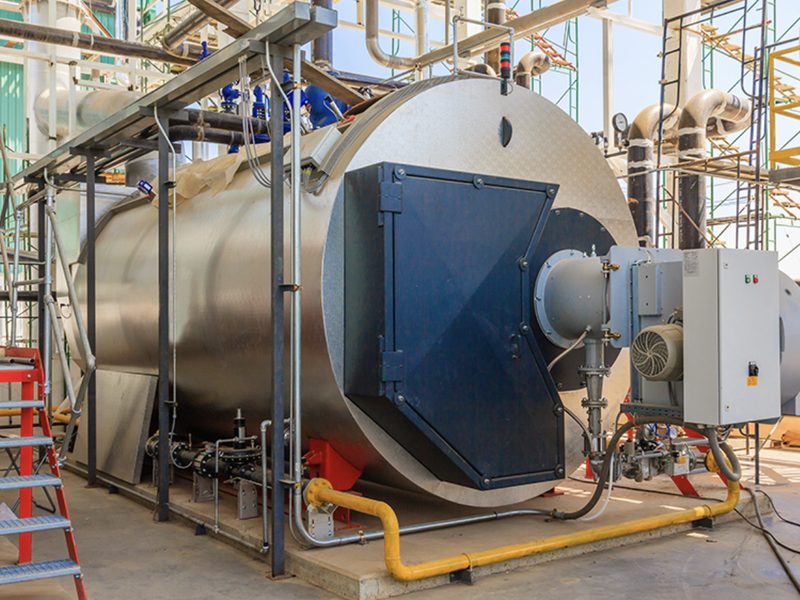
In a Michigan winter your boiler is the piece of equipment with the least tolerance for being wrong. Vitality services the hydronic plants commercial buildings actually run: firetube and watertube, cast iron sectional and copper fin-tube, hot water and low pressure steam, condensing and non-condensing. That means burners, gas trains, and flame safeguard controls, heat exchangers and boiler blocks, pumps and expansion tanks, feedwater and condensate systems, low-water cutoffs and relief valves, and the combustion analysis that tells you whether any of it is actually right.

The stakes are not comfort. A heating failure on a design night is an occupant safety problem, and it is a freeze problem: coils, piping, and sprinkler lines do not wait for a parts order. Boilers also fail quietly long before they fail loudly. Return water that comes back too cold, a burner nobody has put an analyzer on since startup, or a boiler short cycling against an oversized load will all keep the building warm right up until the season they do not. The work is finding those in September, not January.

Return temperature is not a detail

The water coming back is what kills it.

A cast iron block wants return water at or above 135 degrees, and it cracks when return arrives more than 40 degrees below the idle boiler. Here is the part that surprises people: primary and secondary piping does not protect you from either. It protects flow, not temperature. We look at what is coming back, not just what is firing.

Capabilities

What we service on commercial boilers.

  • Firetube, watertube, cast iron sectional, and copper fin-tube service
  • Burner service, ignition, flame safeguard, and gas train diagnostics
  • Combustion analysis, tuning, and efficiency verification
  • Heat exchanger and boiler block inspection, cleaning, and descaling
  • Low-water cutoff and relief valve testing and replacement
  • Return temperature protection: bypass, mixing, and diverting valve setup
  • Pump, expansion tank, feedwater, and condensate return service
  • Seasonal startup, shutdown, and pre-winter readiness inspection

From the blog

Related reading.

View all articles

FAQ

Common boiler questions.

Because a non-condensing boiler is damaged by the two things cold return water causes. Sustained low return keeps flue gas condensing inside a boiler that was never built to handle it, which is corrosion. And return water arriving far colder than the idle boiler is thermal shock, which is what cracks cast iron. Manufacturers publish both limits separately: a minimum return temperature, and a maximum difference between return and the boiler's own temperature. They are different rules for different failures, and they are routinely quoted as if they were one.

Yes. Short cycling drives condensation in the vent and on the heat exchanger, swings system temperature, and wears out the components that are most expensive to replace. At least one major manufacturer puts a hard number on it and says to keep the boiler at six cycles per hour or fewer. Constant cycling is usually a symptom rather than the disease: an oversized boiler against a small load, a control problem, or too little system volume. Fixing the cause is what stops it, and adding buffer volume is sometimes the honest answer.

No. Federal minimum efficiency standards apply to equipment being manufactured, not to the boiler already in your building, and there is no requirement to replace working equipment. It is also worth knowing that a condensing boiler only delivers its rated efficiency if your return water is cold enough for it to actually condense. Dropped into a system designed around high supply and return temperatures, a condensing boiler often will not condense and will not pay back what the brochure implies. The distribution system decides that, not the boiler.

Need service now?

24/7 Response · Southeast Michigan